What a Truck Air Filter Production Line Requires Beyond Pleating
Many customers planning a truck air filter production line first ask whether production can begin with a single pleating machine. While pleating is a key manufacturing step, it is only the starting point. After pleating, the filter media must be cut, formed and bonded, then assembled with the inner mesh, outer mesh, end caps and sealing components to produce a qualified finished filter.
Focusing only on the price of one machine can lead to incomplete process planning. Customers must also consider filter media cutting, inner and outer mesh production, the choice between metal and PU end caps, and whether all processes can operate at a coordinated production rate. Without proper planning, additional equipment purchases, repeated layout adjustments and production delays are often unavoidable.
Pleating Is Only the First Step: Cutting and Bonding Are Essential
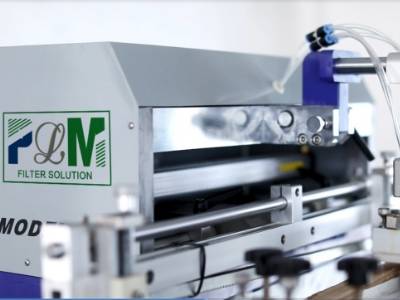
Truck air filters typically use wider and thicker filter media. Pleat height, pleat pitch and forming consistency directly affect subsequent assembly. A pleating machine only forms the media; the pleated filter pack must still be cut to the correct size, shaped and bonded before entering the assembly stage. Inaccurate cutting can result in poor end cap fit, while unstable bonding may cause delamination, deformation or sealing failure. Equipment selection should therefore consider not only pleating performance, but also downstream cutting, bonding and production-line coordination. When planning a truck air filter production line, we integrate pleating, cutting, shaping and bonding into one continuous process.
Inner and Outer Mesh Production Requires a Dedicated Process Chain
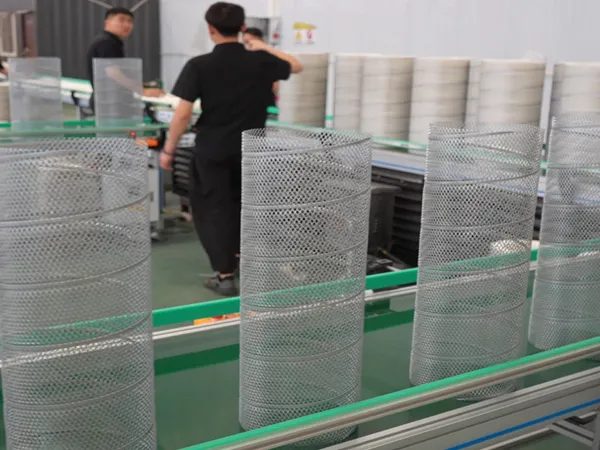
Truck air filters rely on the inner and outer mesh to support the pleated media, maintain the filter shape and prevent deformation. Although these components can be sourced externally, in-house production during batch manufacturing provides better control over specifications, delivery and consistency.
The process typically includes expanded mesh forming, flattening, slitting and rolling. Each stage affects the mesh structure, width accuracy, processing stability, roundness and fit with the filter body. Any mismatch can compromise appearance and assembly quality. We therefore coordinate mesh production with filter media processing and final assembly to ensure consistent capacity and continuous operation across the truck air filter production line.
Metal and PU End Caps Require Different Production Routes
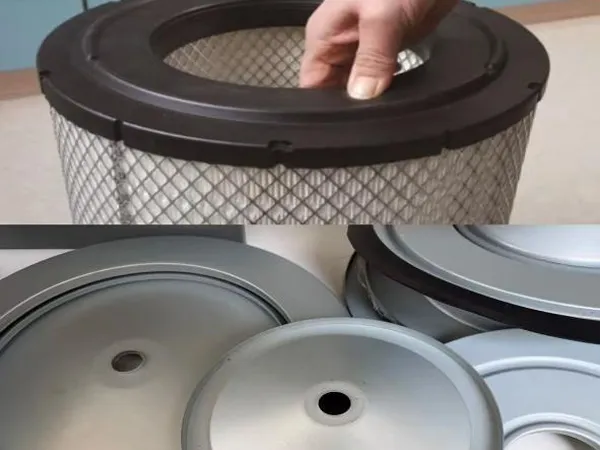
Truck air filters generally use either metal or PU end caps, and each route requires different materials, equipment and process controls. Metal end caps rely on stamping, forming and bonding, with emphasis on dimensional accuracy, structural strength and adhesive compatibility. PU end caps require dispensing, molding, foaming and curing, with emphasis on material ratio, mold accuracy and curing time.
The end cap route should be determined early because it directly affects equipment configuration and production rhythm. The right choice depends on the target market, filter specifications, budget and factory capability. We help customers select and plan the appropriate end cap process based on the truck air filter models to be produced.
Process Integration in a Truck Air Filter Production Line
The main challenge in building a truck air filter production line is not the number of machines, but how efficiently each process works together. Pleating speed, cutting accuracy, mesh production, end cap assembly, adhesive curing, operator workflow and factory layout must be properly coordinated. A bottleneck at any stage can reduce the efficiency of the entire line. We provide an integrated equipment solution from pleating to final assembly and plan the equipment configuration, process flow and commissioning sequence according to product specifications, target capacity and factory conditions, reducing compatibility issues, repeated layout adjustments and later correction costs.
Why Complete Production Planning Matters
We have seen many customers experience delays of more than six months because the complete production process was not planned from the outset, leading to additional equipment purchases later. Planning the entire production line in advance is far more cost-effective than correcting process and layout issues afterward. For truck complete prodair filter production, customers need more than a single pleating machine; they need auction solution that takes filter media through to finished filters.
Contact Us for a Complete Truck Air Filter Production Line Solution
If you are planning to produce truck air filters, provide your target filter models, specifications, required capacity, budget and factory conditions. We will help you develop a complete process checklist and determine the equipment required for filter media pleating, inner and outer mesh production, end cap processing and final assembly. To plan your production line as an integrated system from the outset, please contact us with your project requirements.