Building a PP Air Filter Production Line for Stable Series Production
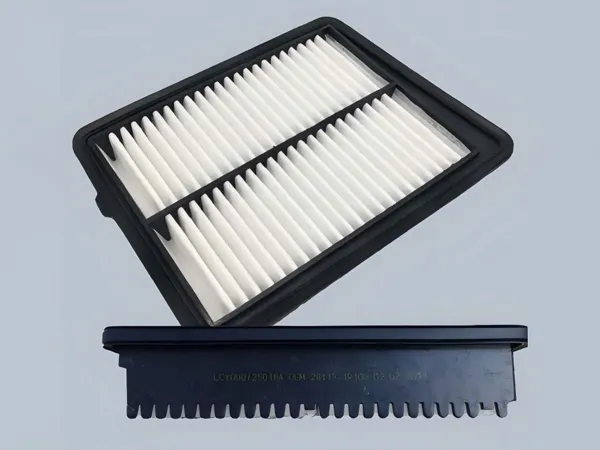
An injection molding machine can form the PP frame, but stable series production depends on the coordination of media preparation, pleating, mold design, loading, molding, inspection and downstream handling. A complete PP air filter production line should therefore integrate media preparation, pleating, injection molding and assembly, printing, film shrinking and conveying, with each stage providing consistent input conditions for the next.
Plan for the Full Product Family from the Start
PP air filters are rarely limited to a single size. A product range may include different dimensions, frame geometries, sealing structures, reinforcement ribs and media requirements. A machine-and-mold package designed for one approved sample may work well for that model but limit future product expansion.
Before equipment selection, define a product-family matrix covering:
- Finished length, width and height, including frame and sealing geometry.
- Media type, thickness, stiffness and recovery behavior.
- Pleat height, pitch, count, packed-core dimensions and tolerances.
- Mold envelope, cavity arrangement, loading method and changeover frequency.
- Target output, batch size, packaging format and planned future models.
Defining this matrix before machine selection places current and future models within one engineering framework, reducing repeated media, tooling and equipment-matching work when new part numbers are introduced.
Pleating Stability Determines Assembly Consistency
Pleating establishes the dimensional foundation of the filter core. Pleat height defines core depth, while pleat pitch, count and cutting dimensions determine media usage, packed length and positioning accuracy during molding or assembly.
Variations at this stage can affect downstream stability. An oversized core may be over-compressed during loading, causing leaning pleats or local bunching, while an undersized core may shift within the locating area and affect frame coverage, appearance and sealing consistency. Since media thickness, stiffness and spring-back vary between materials and batches, pleating parameters must be verified through samples and maintained as a repeatable process recipe.
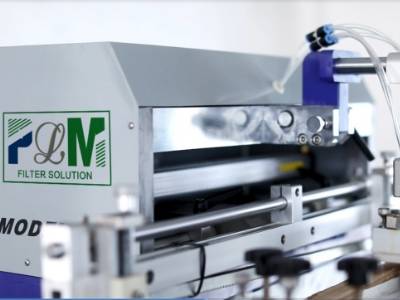
Pleating-machine selection should consider more than production speed. Media width, target pleat range, model-change frequency, line capacity and operator requirements determine the appropriate configuration. A consistent pleated core provides the foundation for reliable molding and assembly.
Integrate the Injection Machine, Mold and Loading System
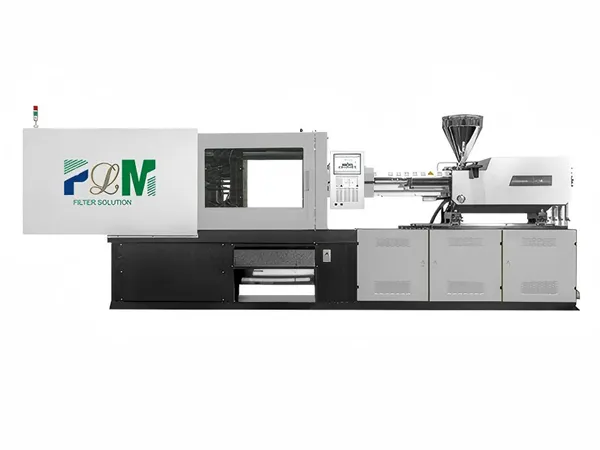
Clamping force and shot capacity are important, but they represent only part of PP air filter machine selection. Platen size, mold envelope, opening stroke, ejector arrangement, loading structure, media placement space and part removal method must be evaluated together. Stable production requires consistent coordination between equipment, tooling and operating sequence. The pleated core must be positioned consistently in every molding cycle, with locating references, feeding, slide movement, part removal and mold cycles working in a repeatable sequence. Mold design should also consider frame filling, media retention, demolding and dimensional stability after cooling.
The PLKS-1500 and PLKS-1500W are designed for the injection molding and assembly stage of PP air filter production. The suitable configuration depends on the product-family matrix, mold requirements, target output, factory conditions and automation level. Machine selection should be based on the complete production requirement rather than a single sample or specification.
Changeover Efficiency Determines Series Production Performance
A product family is not production-ready simply because each model can be produced once. The production line must return to a stable condition after changeover without repeating the learning process. Each part number should have controlled master data, including mold ID, media grade, pleating recipe, cut length, molding settings, first-piece checks, marking content and packaging requirements.
Takt time should be evaluated across the entire line. If pleating capacity exceeds injection molding and assembly capacity, work-in-process will accumulate. If molding output exceeds core preparation, unloading or packaging capacity, the main machine will wait. Downstream operations such as printing, film shrinking and conveying should also be planned early to prevent new production constraints.
Translate Product Requirements into an Executable Production Plan
A production-line partner translates product requirements into a process that can be installed, verified, repeated and expanded, rather than simply supplying individual machines. For a PP air filter product range, the planning process can be organized into five stages:
- Collect samples, drawings and planned models to build the product and capacity matrix.
- Confirm media behavior, pleated-core dimensions and mold concepts before finalizing process requirements.
- Select a standard, semi-automatic or automatic configuration based on space, budget, labor and changeover needs.
- Use sampling and trial production to define process parameters, first-piece criteria and response methods.
- Complete layout, packaging and conveying plans, followed by installation, training and technical support.
The objective is not to install every available machine, but to create a production configuration that supports the current product range and future expansion of molds, models and capacity. For new factories, this avoids isolated equipment purchases that create process gaps; for existing factories, it helps identify constraints affecting output and consistency.
From One Machine to a Repeatable Production Method
Stable PP air filter production is ultimately measured by repeatability: consistent filter cores across different media batches, restored process settings after changeover, synchronized molding, assembly and packaging, and the ability to introduce new models through the same validation process. Long-term production confidence comes from how the complete process works together during daily operation.
To turn an approved sample into a scalable product family, share the finished dimensions, structure photos or drawings, planned models, target capacity and available factory space. A complete PP air filter production line can then be configured around pleating, mold design, injection molding and assembly, printing, film shrinking and conveying requirements.