
Raw Materials
Filter paper, PU components, molds and hot-melt adhesive.

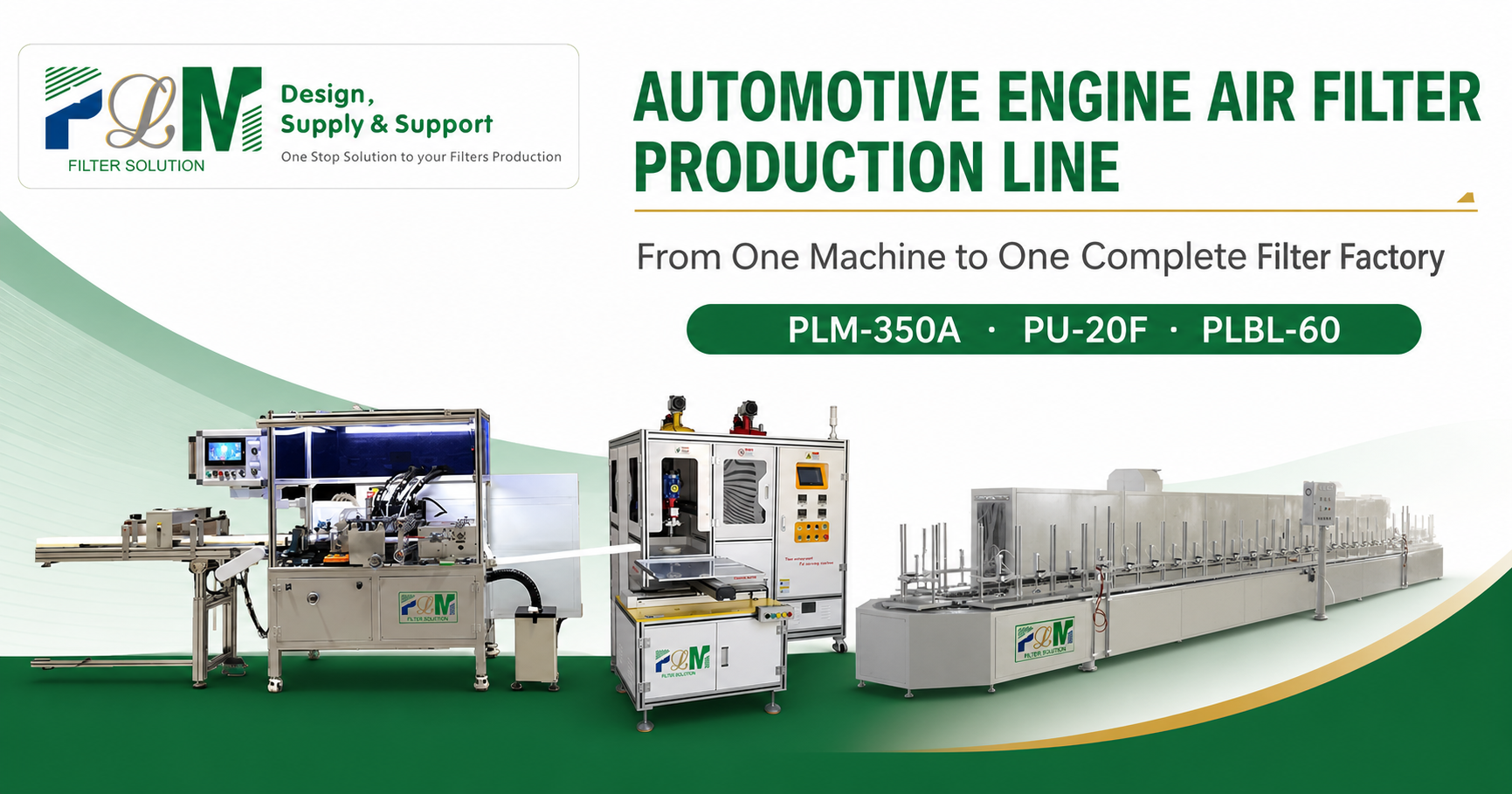
From filter paper and PU components to pleating, cutting, PU frame molding, curing, trimming and final installation—PLM helps new factories and existing manufacturers connect every production step.
The production route is presented entirely in English and follows the actual process sequence used for PU-framed automotive engine air filters.
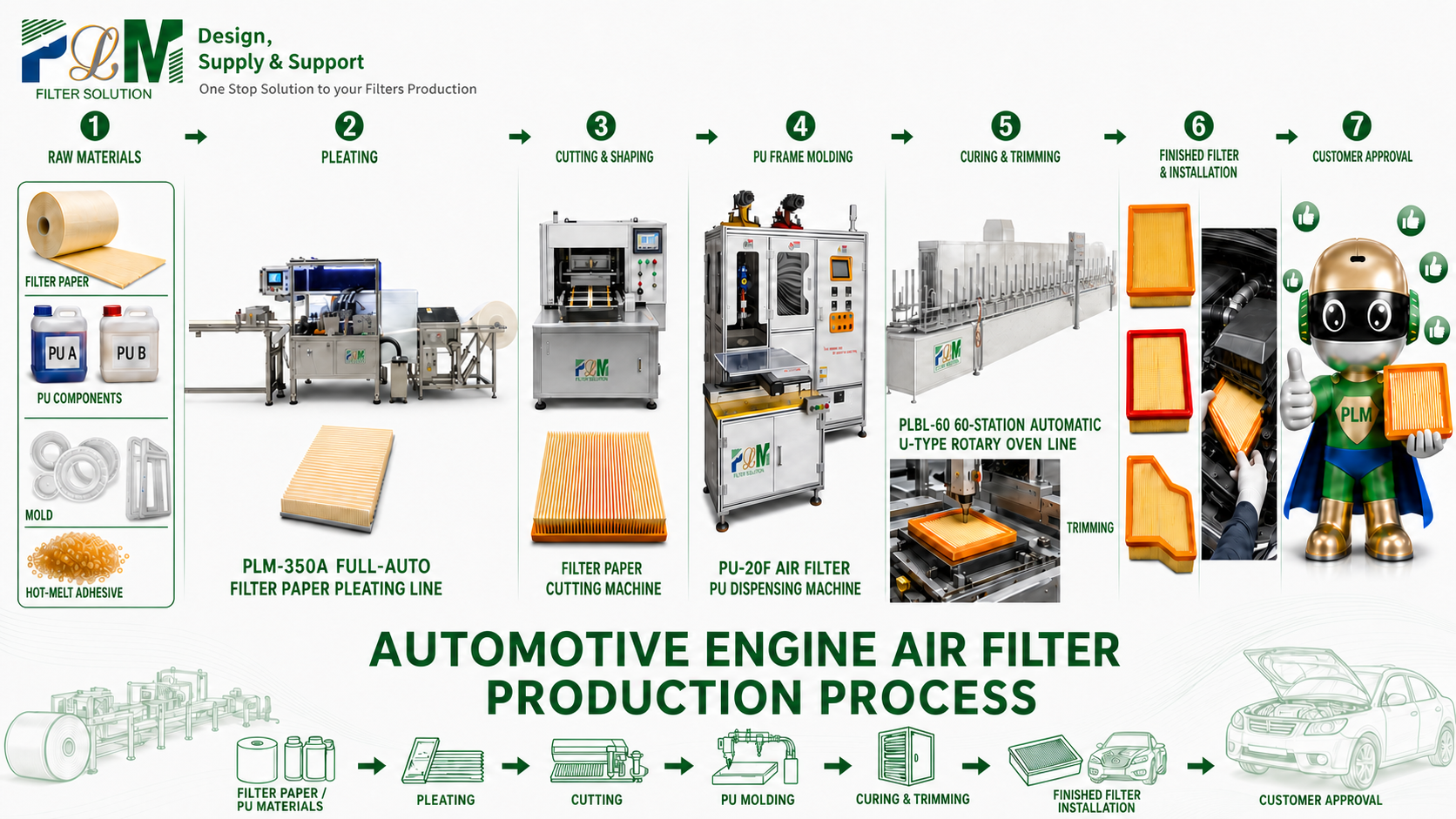
Filter paper, PU components, molds and hot-melt adhesive.
Form stable pleat height, pitch and count with PLM-350A.
Cut the pleated media to the required filter size and shape.
Dispense and form the PU sealing frame with PU-20F.
Cure the PU frame with PLBL-60, then trim the edges.
Check appearance, dimensions, fit and installation direction.
Confirm samples before stable batch production.
The core-machine visuals use the official PLM website product images and retain the approved PLM machine-body logo.
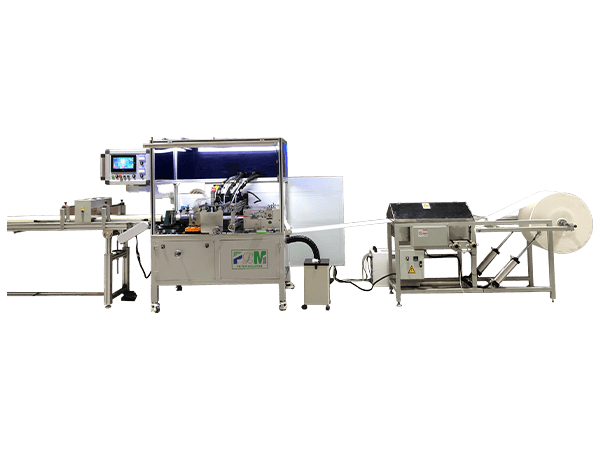
A connected pleating line for paper feeding, forming and controlled output.

Two-component PU dispensing for rectangular, round and special filter frames.
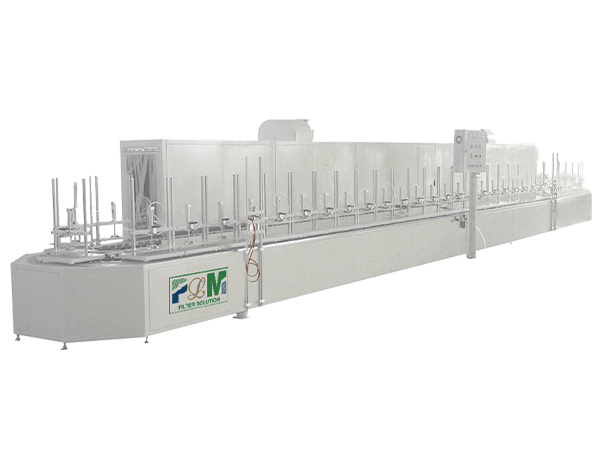
A long, continuous curing route designed to connect PU molding with trimming.
Cutting, trimming, conveying, molds and auxiliary equipment are matched after the filter dimensions, shape, capacity and factory plan are confirmed.
PLM supplies automotive air filter manufacturing equipment for new filter factories and existing line upgrades. The solution can connect a filter paper pleating machine, filter paper cutting machine, PU dispensing machine for air filters, automatic curing oven, trimming equipment, air filter molds, PU end caps and production materials.
Plan the full air filter making process from filter media and pleating to PU frame molding, curing, trimming and finished-filter inspection.
Match PLM-350A, PU-20F and PLBL-60 with the required cutting, molds and auxiliary equipment for your filter size and target capacity.
Choose a complete filter factory solution or retain suitable existing equipment while improving output, consistency, labor control and automation.
A practical production route matched to your target engine air filter.
Equipment matched to product size, output, labor and automation goals.
Filter paper, PU components, hot-melt adhesive and consumables reviewed together.
Product drawings, samples and mold requirements checked before the final scope.
Machine placement, material flow, utilities and future expansion considered.
Commissioning guidance, operator training, spare parts and technical support.
You do not need to know the machine model. Share your filter, capacity and project stage. A PLM specialist can help clarify the next step.

PLM · Design, Supply & SupportMachines · Materials · Molds · Process · Training
Yes. Start with your target filters, dimensions, daily output, budget and available factory space. PLM can help connect machines, materials, molds, process, layout and operator training.
Yes. For an upgrade project, PLM can review the existing pleater, PU dispensing, curing, trimming and labor arrangement, then identify which equipment can remain and where the bottleneck is.
Send finished-filter photos or samples, dimensions, filter paper, PU frame requirements, target output, SKU quantity, factory layout and current production problems.
Different rectangular, round or special shapes may require different molds, cutting methods and process settings. The final configuration should be checked against actual samples or drawings.
PLM supports material matching, molds, process planning, installation guidance, training, spare parts and long-term technical communication.


PLM Filter Solution Group Co., Ltd. supply one-stop air filter element production line, including production machines, test machines, filter materials and other accessories.