Matching Cabin Filter Media to the Product and Process
Matching cabin filter media to the finished product and production process requires coordinated decisions on pleating, edge materials, adhesive, and equipment settings. White and gray cabin filters may share the same outside dimensions, but their media can behave differently during production.
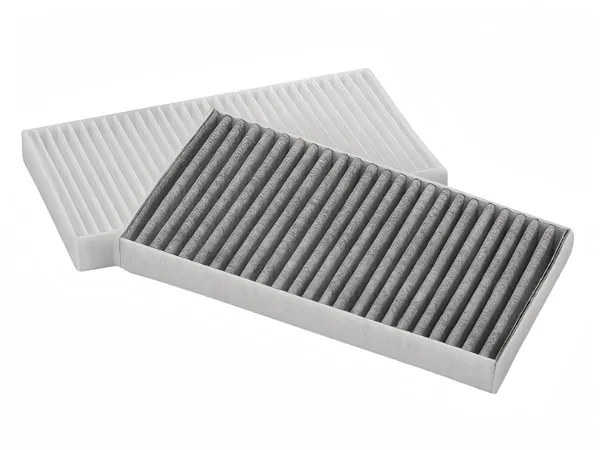
White nonwoven media is commonly used for particle filtration, while activated-carbon composite media adds an adsorption layer. These differences can affect feeding, pleating, recovery after folding, and bonding to the edge structure. For this reason, media selection should be considered together with product design and process planning. The key question is not which material is universally better, but whether its construction and physical state suit the target filter, intended airflow and acceptance requirements, and the production route available in the factory.
Define the Finished-Filter Requirements First
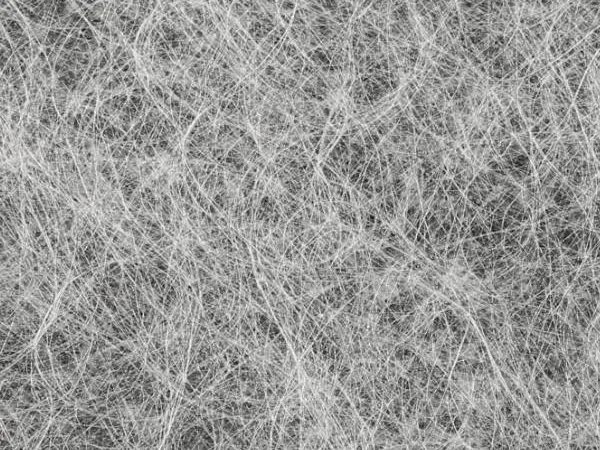
We classify nonwoven filter media into several categories, including standard nonwoven, activated-carbon, and antibacterial media. Published grades differ in basis weight, thickness, air permeability, and other reference properties, so color alone cannot define the material or predict finished-filter performance. A white nonwoven cabin filter typically focuses on particle filtration while balancing airflow with the specified filtration target, while an activated-carbon composite filter adds gas adsorption while retaining a particle-filtering structure. Its carbon-containing layer also changes the material construction that passes through production. Material selection should begin with the finished-filter specification, including dimensions, target application, media construction, pressure-drop and filtration requirements, edge structure, and any adsorption requirement. Published material data can narrow the options, but the final grade should be confirmed against the customer’s sample, drawing, and validation method rather than selected from a single value.
Material Properties Affect Pleating Performance
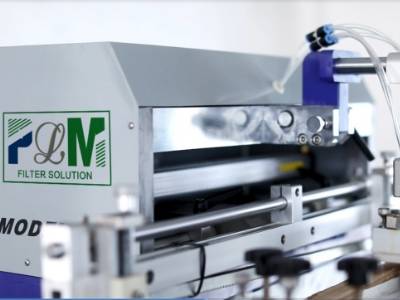
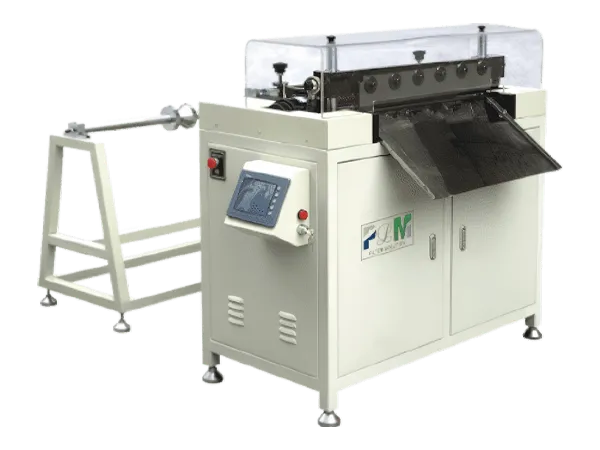
Pleating is a forming process, so performance depends on the material entering the machine. Thickness affects folded-pack height and material usage, while stiffness influences whether pleats retain their shape or open after folding. Surface condition and friction affect feeding and alignment. Activated-carbon composite media adds another variable: the distribution and retention of the carbon-containing layer. Handling should minimize surface damage and particle release while maintaining a regular pleat pattern, as material that appears acceptable when flat may behave differently after repeated bending, compression, and cutting. Evaluation should therefore focus on the formed pack, including pleat height and pitch, overall dimensions, recovery after folding, edge straightness, and visible material damage. The PL-AUTO55-700M provides adjustable feeding, folding, and temperature settings, but final parameters should be established using representative media and the intended filter size.
If the same line is used for both white and activated-carbon filters, trials should confirm whether the same tooling and operating window are suitable. Where changeover is possible, parameter settings, material handling requirements, and first-piece checks should be recorded for each product family.
Match Edge Materials and Hot-Melt Adhesive to the Filter Media
The pleated pack becomes a usable filter only after the specified support structure is added. For cabin filters, our complete-line guidance lists white nonwoven hard-edge strips and hot-melt adhesive alongside the filter media. Edge strips must be cut to the required width and length, remain straight for accurate positioning, and suit either two-side support or a complete four-side frame. The PLHK-50 is used for cabin-filter edge-material cutting. Inconsistent strip dimensions can complicate positioning, corner joining, and finished-filter size control, so edge material should be confirmed together with the pleated media rather than treated as a generic accessory. Hot-melt adhesive must suit the material surfaces and bonding process. We list different hot-melt types for different filter applications, including LMHB150 for cabin-filter edge bonding. Melt condition, application temperature, open time, initial tack, and cooling behavior affect dispensing and pressing during production. Bond quality should be checked on the actual assembly for media and edge-strip positioning, adhesive-line continuity, excessive overflow, and the appearance and dimensions of corners and trimmed edges. These checks support process consistency but do not replace the customer’s specified filtration, adsorption, or durability validation.
Confirm Materials, Filter Requirements and Equipment Together
We review nonwoven or activated-carbon media, hard-edge strips, hot-melt adhesive, pleating equipment, edge-material preparation, bonding equipment, and tooling as a single production route. Not every project requires every machine; the configuration should reflect the finished filter, model range, target output, operator availability, and factory conditions.
For a new line, the review can start with filter samples and drawings, followed by material confirmation, trial pleating, and bonding-route selection. For an existing line, the same approach can identify the actual constraint: new media may require revised parameters, while unstable edge dimensions may indicate a material-preparation issue rather than the pleater. Trials should then compare the material before and after forming, record the settings that produce an approved pack, and verify the edge-bonded sample. Once this reference is established, machine selection and operator instructions can be based on confirmed process conditions rather than the assumption that one line can process every media type.
Filter media should not be treated as an isolated purchasing item. It becomes part of a finished cabin filter through controlled pleating, cutting, and bonding. Confirming these relationships before finalizing material and equipment orders helps reduce repeated adjustments and establish a reproducible process.
Match Filter Media to Finished-Filter Requirements
For an initial material and process review, prepare:
- A finished-filter sample or drawing with dimensions and edge structure.
- Media grade, roll width, thickness, and available technical data.
- White-media and activated-carbon samples if both products are planned.
- Target output, model mix, current equipment, and the main production issue.
Share these details with us. We can help identify the material checks, trial steps, and equipment considerations that should be confirmed together.