Filter paper must match both filtration and pleating
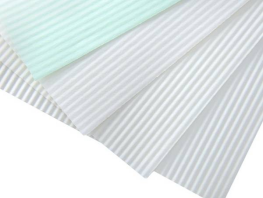
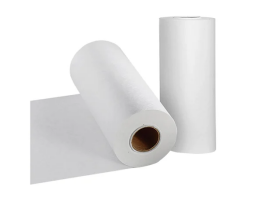
Start with the intended air, oil or fuel application. Compare basis weight, thickness, air permeability, pore-size information, stiffness and burst strength under stated test conditions. Basis weight alone does not describe filtration performance. Air-permeability results need the same pressure difference for a meaningful comparison. PLM offers filter-paper options with smooth, corrugated and crepe surfaces, allowing the material form to be considered alongside the intended filter structure.
Processing suitability must be assessed alongside the filtration task. Confirm the required particle-removal performance, initial pressure drop and applicable dust- or contaminant-holding requirements using the specified test methods. For oil and fuel applications, also confirm compatibility with the actual fluid and service temperature. Compare data for equivalent specimen conditions and test conditions; a favorable air-permeability or pore-size value alone does not establish that a grade meets the finished filter requirements.
Processing trials should show whether the paper can hold the target pleat without cracking or excessive springback. A change in thickness or surface profile can alter pack dimensions and the space available for adhesive. Confirm the resin system and any required heating treatment for the actual grade; a heating recipe for one paper should not be applied to another without verification.
Thickness and stiffness influence different stages of conversion. A paper may form a clean fold but still produce an oversized pack when the pleats are collected. A softer grade may need different handling to maintain spacing during transfer. Check the pack after cutting and assembly, as well as immediately after pleating, to understand where dimensional change occurs.
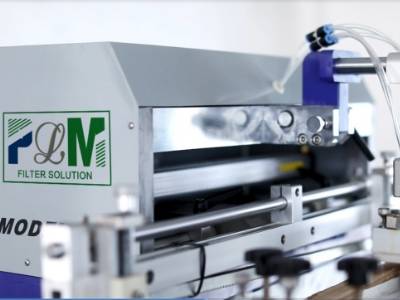
By supplying both filter materials and production equipment, PLM provides a common point for discussing paper selection and machine configuration. Material width, finished dimensions and the required forming route can be considered together, making procurement decisions more closely connected to the filter you intend to manufacture.
Protect HEPA glass fiber media during conversion
Glass fiber media used for HEPA filtration need careful handling because concentrated tension and sharp bending can damage the sheet. Begin trials with the actual roll, not a substitute of similar appearance. Check web alignment, contact surfaces and tension through unwinding, pleating, cutting and transfer. Look for damage at fold lines and edges as well as obvious tears.
Review the selected glass fiber grade against its filtration data and permitted converting conditions before setting the machine. When assessing efficiency and resistance, retain the test particle size or counting channel, airflow or face velocity, and other conditions required by the applicable method. Keep material qualification separate from finished-filter classification. After conversion and assembly, confirm the required finished-filter performance rather than treating the roll label as proof of the final grade.
Pleat support must suit the intended construction. In a separatorless pack, adhesive beads can maintain spacing between pleats; a separator design uses inserted spacers. More pleats in the same frame can crowd the flow passages, so pleat count should be assessed together with geometry and measured resistance. A support mesh protects or supports the media; it is not the glass fiber filtration layer itself.
For a separatorless pack, adhesive position and cooling are part of dimensional control. If the pack is cut or compressed before the spacing structure is stable, its length or pitch may change during handling. Review bead continuity, collection speed and support during transfer together. The objective is to retain the approved flow passages and pack dimensions through the next operation.
Our PLWG-700 Auto HEPA Filter Mini Paper Pleating Production Line combines pleating and hot-melt dispensing for glass fiber or polypropylene media. Adjustable conveying and dispensing settings help coordinate adhesive application, pleat formation and cooling. Matching these functions in the production route gives manufacturers a practical basis for producing a stable pack geometry before frame assembly and finished-filter testing.
Select PU adhesive for the actual joint or molded part
PU adhesive can form the frame or end cap of an air filter while connecting it to the pleated media. The molded perimeter also becomes part of the product’s sealing structure. Select the grade around the required hardness, resilience, dimensions and service conditions, rather than choosing only by color or purchase price.
The A-to-B ratio belongs to a specific formulation. For example, PLM LM1252 and LM1335 use reference mass ratios of 100:25 and 100:33 respectively. Confirm the selected grade and current product data, then match the dispensing setup to that formulation. Distinguishing mass from volume ratios is essential when translating a material specification into machine settings.
A correct ratio is only one part of the PU processing window. Use the selected grade’s technical data to confirm component temperatures, usable working time after mixing, and the specified molding and curing conditions. The pouring sequence must allow filling and media placement to be completed while the mixture remains usable. Check actual A and B delivery against the required mass ratio rather than assuming that a pump setting alone proves the correct proportion. Record the conditions used in the trial so that later production can reproduce them.
During trials, verify dispensing accuracy, mixing consistency, fill distribution and the condition of the bonded surfaces. After the specified curing period, inspect the media-to-PU interface for gaps or incomplete contact. Confirm molding, demolding and full-cure conditions separately so that the part receives adequate support throughout production.
For HEPA frame potting, select an adhesive system qualified for the actual media, frame and service conditions.
Define acceptance for the cured joint as well as its appearance. Depending on the product requirements, this may include an appropriate bond-strength or sealing check and confirmation of dimensions and resilience. Demolding readiness does not by itself demonstrate that the part has reached its required final properties. Establish the check method, conditioning and acceptance criteria before approving the trial; use the results to confirm the chosen material and process together.
A continuous-looking outer edge is only one check on a molded part. Uneven filling can leave a local gap, while movement during curing can disturb the joint. If defects recur, compare the affected location with the dispensing path, media position and cure conditions. This directs adjustment toward the relevant process variable instead of changing the adhesive grade without identifying the cause.
PLM can include PU adhesive, molds and dispensing equipment in the production configuration. Considering the cavity shape, media placement and pouring operation together helps connect the required frame structure with the equipment used to make it. For manufacturers planning a new product, this gives the molding step a defined place in the overall process.
Keep pleat stabilization separate from frame sealing
A filter can contain more than one adhesive because the joints do different jobs. A hot-melt bead may stabilize pleats, while a selected PU system forms a perimeter or seals a suitable interface. Changing one adhesive therefore requires a review of its own function. More adhesive is not automatically better: assess whether it closes a required gap or unnecessarily occupies the filtration area.
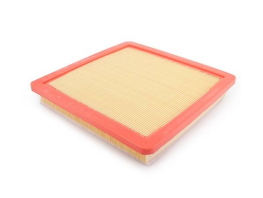
For a PU-frame air filter, the production plan connects paper pleating and cutting with molding, assembly and the required curing and trimming operations. A glass fiber HEPA route instead needs its own pleat-support and frame-sealing design. Define each route from the finished construction before choosing equipment or transferring settings between products.
Capacity planning should include these interfaces. A faster pleater does not increase accepted output if molding, curing or inspection cannot keep pace. For a range of filter sizes, also consider roll changes, tooling replacement, adhesive replenishment and cleaning access. Planning around the product mix helps identify where automation is useful and where a well-organized manual operation remains appropriate.
Approve the combination through samples and finished filters
Use incoming checks to confirm material identity and agreed properties. During conversion, record pleat height, pitch, pack dimensions, visible damage and adhesive condition. After assembly, verify the checks appropriate to the filter: engine air filters and HEPA filters require different test plans. HEPA acceptance should address the specified efficiency, resistance and leakage requirements at defined conditions. A media report alone does not verify assembly sealing.
Link trial results to the material and adhesive lots, drawing revision and process settings. When an abnormal result appears, use its location and the production record to guide the investigation; a high resistance result does not by itself identify a defective material. Approve the combination only after the complete assembly meets its agreed checks.
PLM support connects equipment selection with daily production
Choosing PLM brings machine selection, material matching and testing equipment into one coordinated discussion. For a new factory or an existing-line upgrade, the configuration can cover the main machines, auxiliaries, molds and initial materials according to the product scope. That wider view helps customers identify the interfaces needed between a purchased machine and the rest of the workshop.
Support continues into installation and operation. We provide installation guidance, technical training, maintenance guidance and spare-parts support. Training resources cover controller operation, daily maintenance and troubleshooting, with online learning and practical factory training options. This helps the local team build the knowledge needed to operate and maintain the selected equipment.
A suitable investment should also fit the current stage of the business. Production planning can start with the first product range and target capacity, then allow for later expansion. Reviewing the process and workshop requirements together helps customers choose equipment with a clear purpose today and a considered place in the next stage of production.
Share your filter drawing or sample, media specification, adhesive grade or technical data sheet, service conditions, target output and current production challenge with PLM Filter Solution. We can review the material, machine and process requirements together and develop a configuration around your product and workshop. Whether you are selecting a pleating machine, matching PU molding materials or planning a production upgrade, a coordinated solution gives each purchase a clear role in the finished-filter process.